
Anthropic keeps quietly rewriting its own deadline. In May 2026 the company raised Claude Code's weekly usage ceiling by 50%, framed as a temporary boost. Three months and several extensions later, the ceiling is still raised — and the company still hasn't said whether it will stay that way. That pattern, repeated across three separate product moves this summer, is the clearest signal of where Claude is headed and how uncertain the economics behind it remain.
What follows separates what Anthropic has stated and shown from what is still speculation, drawing only on the company's own announcements and independent reporting.
The usage boost that won't expire on schedule
Anthropic first increased Claude Code's weekly quota by 50% in May, and has repeatedly extended the deadline since. The most recent extension pushes the higher ceiling through August 31, 2026, covering Pro, Max, Team, and seat-based Enterprise plans. Anthropic's own developer account framed it plainly: the company is extending the 50% increase to weekly Claude Code limits through August 31, hoping to make this a permanent change, but strong demand for its models means capacity may be tight over the coming weeks.
That last clause matters more than the extension itself. Anthropic has been provisioning new compute aggressively through the first two quarters of 2026, and independent coverage frames the repeated extensions as a defensive move against engineering teams who were starting to split their workloads across vendors. In other words, the discount is retention economics, not generosity — and it is directly tied to how much spare GPU capacity Anthropic has on hand at any given moment.
Cowork leaves the desktop
The second confirmed move is broader distribution for Claude Cowork, Anthropic's agent for delegated, multi-step work outside of coding. Cowork launched in research preview on January 12, 2026, initially for Max subscribers and expanded to Pro within a week, then moved to general availability on April 9, 2026, available on all paid Claude plans for macOS and Windows. A mobile and web beta followed, starting with Max subscribers on July 7. As of August 18, 2026, Anthropic says Claude Cowork has fully rolled out to mobile and desktop for all paid plans.
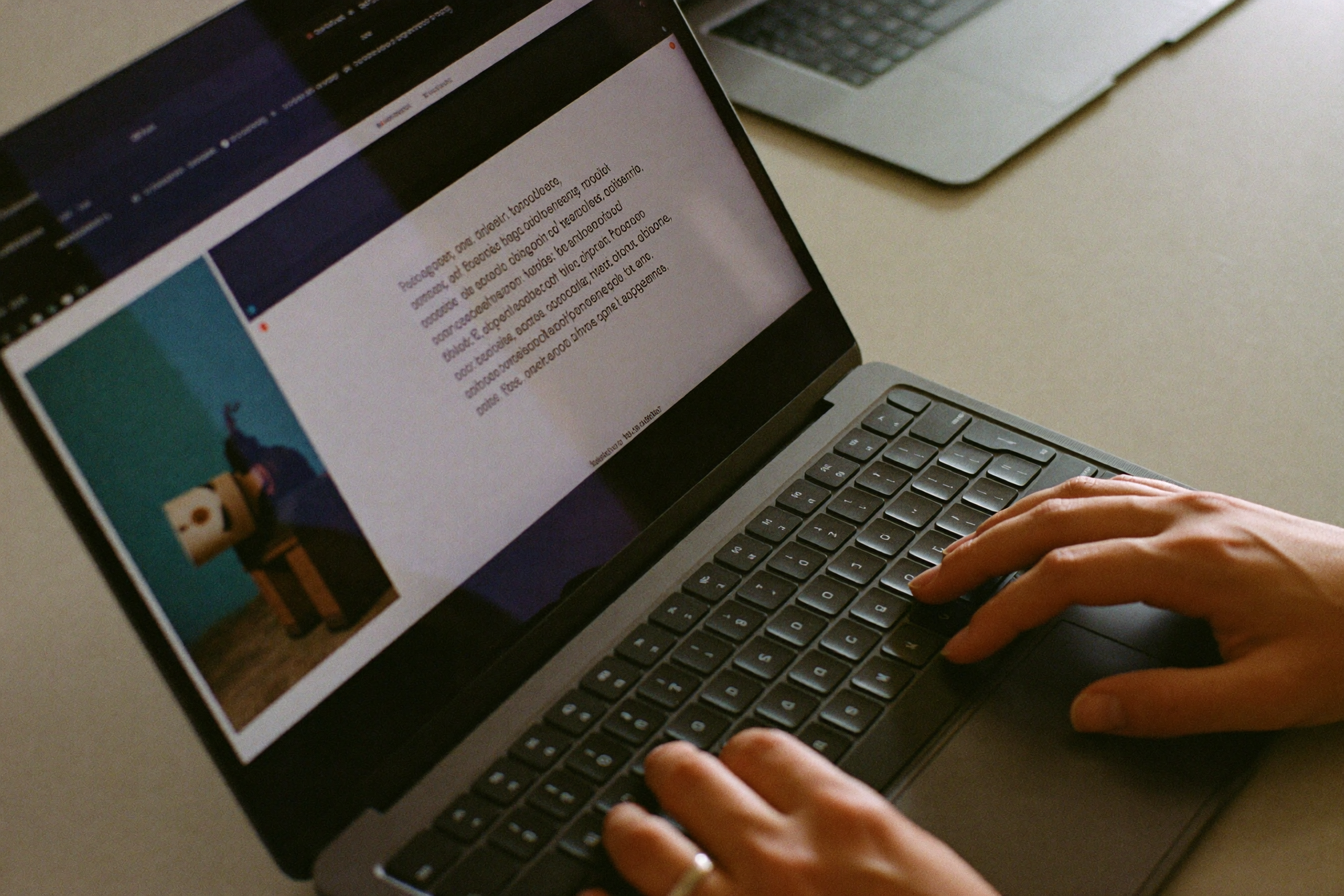
Anthropic's own description of the product is instructive: Cowork is where you hand Claude a task, and it works across your files, calendar, email, messaging app, the web, and other tools you connect until the job is done. That connector list — Slack, Gmail, Google Calendar, Drive — targets people who never touch a terminal. Anthropic's own sampled data backs that up: across 1.2 million Cowork sessions across 600,000 organizations in late May, the company found that software development accounted for less than 9% of Claude Cowork usage, while business operations and content creation made up roughly half.
A design skill built for non-coders
The third confirmed change sits inside Claude Code itself. Anthropic maintains an official skills repository — a set of 17 skills released on GitHub in late 2025 — that extends Claude's slash-command behaviors beyond writing code. One of them, commonly referenced as canvas-design, is built to create beautiful visual art in .png and .pdf documents using design philosophy, for use when a user asks for a poster, piece of art, design, or other static piece. A companion skill, frontend-design, focuses on production-grade UI code rather than static graphics. Together they let a Claude Code session generate a flyer, poster, or interface mockup and hand back a print-ready file, without leaving the same environment developers use to ship software.
What the capacity trade-off signals
All three moves point the same direction: away from a single chat window and toward a platform that finishes tasks across code, documents, and design. That shift is Anthropic's clearest answer to a market where the differentiator is no longer answer quality but task completion. The usage boost, the mobile rollout, and the design skill all lower the friction for non-developers to stay inside Claude rather than switching tools mid-task.

But the usage boost specifically carries a caveat worth sitting with. It is not a permanent pricing decision — it is a promotion that has now been extended multiple times without Anthropic committing to keep it. That is a lock-in success signal, since heavy users have adjusted their workflows around the higher ceiling. It is also a policy tied directly to compute costs and GPU supply. If capacity tightens or the calculus changes, reverting the ceiling could test how much of that usage growth was habit versus genuine paid-plan loyalty. Anthropic has been transparent about this tension in its own communications, repeatedly pairing the extension with a warning about tight capacity rather than an unconditional promise.
The money behind the push
The scale of investment explains why Anthropic can afford to keep extending a compute-heavy promotion. Anthropic raised $65 billion in Series H funding led by Altimeter Capital, Dragoneer, Greenoaks, and Sequoia Capital, valuing the company at $965 billion post-money on May 28, 2026. Company statements tied the round to expanding compute to meet demand for Claude and to scale the products customers rely on. Anthropic has since filed confidential IPO paperwork with the SEC on June 1, 2026, with a public listing floated for as early as this fall. As of this writing, Anthropic remains a private company — there is no tradable stock, ticker, or confirmed listing date, and any claims otherwise should be treated as speculation until a prospectus is public.
The competitive and regulatory frame
Anthropic is not moving alone. OpenAI has launched its own solution called ChatGPT Work, also available on iPhone, iPad, Mac, and the web, and Google launched Spark, its always-on agent, earlier this year. On the development side, GitHub Copilot and Cursor remain the default comparisons for coding assistance, while Canva, Adobe, and Figma still own execution-grade design work. Claude's stated wedge is context length, safety-focused positioning, and continuity between code, documents, and design inside one environment — a claim rooted in the company's own product marketing rather than an independently verified benchmark.
The regulatory backdrop is tightening at the same time these products expand. The part of the EU AI Act that governs high-risk AI systems became enforceable on August 2, 2026, layering onto GDPR obligations that already apply to any agent processing personal data. For a tool like Cowork — one that reads calendars, email, and files by design — that combination of data access and regulatory scrutiny is a real adoption gate in Europe, not a footnote. For operators in Switzerland weighing on-premise or security-first deployments in finance, pharma, and professional services, and for teams in South Korea evaluating fast SaaS adoption cycles, the practical question is the same: how much of Cowork's connector access maps cleanly onto existing compliance controls, and how much requires new governance work before rollout. No verified market-size or growth figures exist for the combined generative AI, developer-tooling, and design-automation space that Claude now competes in, and none should be assumed from adjacent hype.
What to check next
A handful of concrete, observable signals will tell you more than any projection. Whether the 50% usage ceiling survives past August 31 without another extension notice, or quietly becomes the new default, tells you how confident Anthropic actually is in its compute runway. Whether Cowork ever reaches the free tier, rather than staying paid-plan-only, tells you whether Anthropic is optimizing for volume or for revenue per seat. And whether the confidential S-1 process turns into a public prospectus on the timeline currently being floated will settle, for the first time, what Anthropic's actual revenue and cost structure look like outside of press releases.