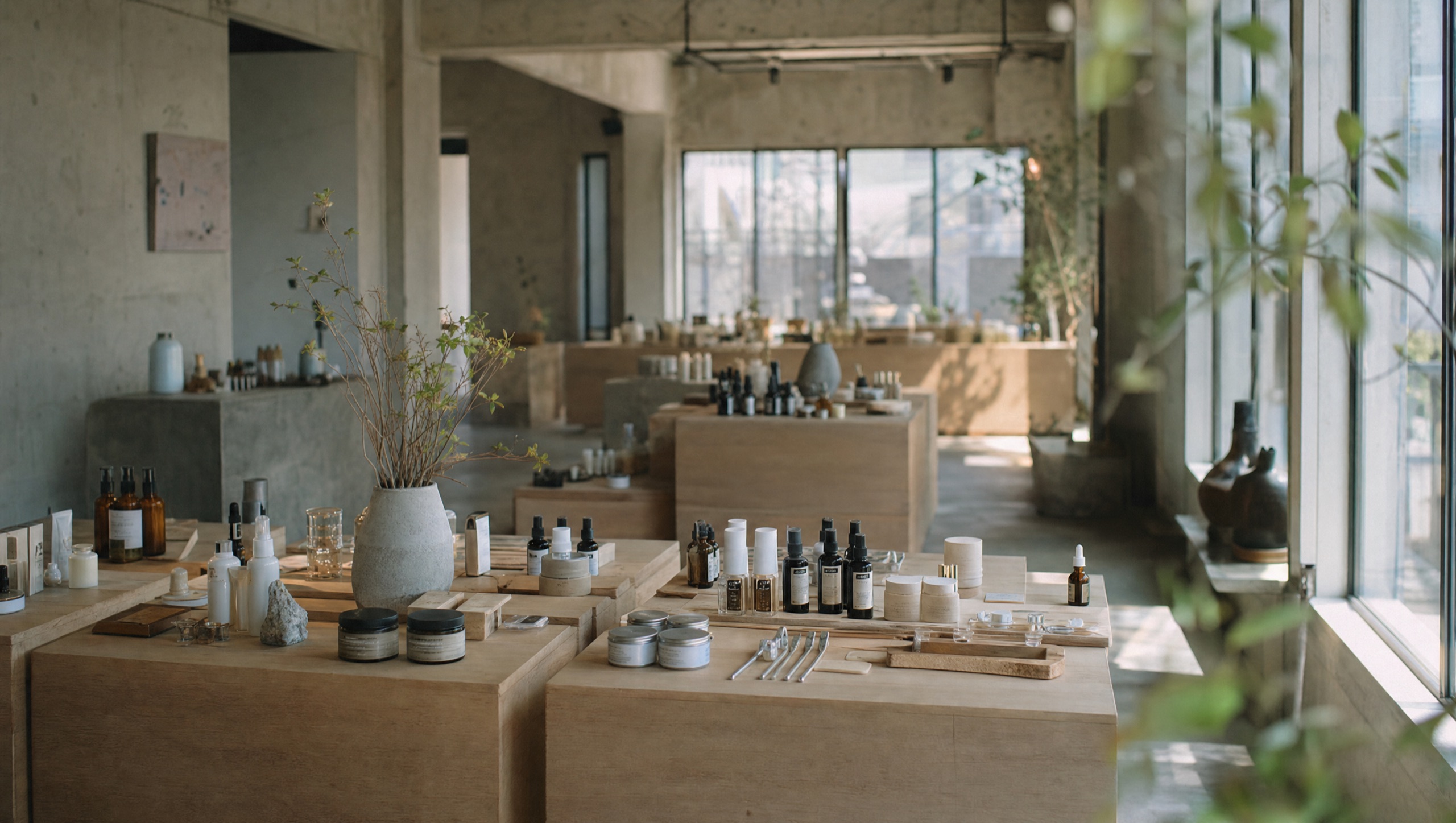
The organiser brought seven or eight references and let everyone smell them without seeing a name, a bottle or a brand. Eighteen people came for two hours. That session, in Lisbon in late 2025, was the seed of what became Lisbon Perfume Club. It is a small data point. It is also the best-documented one we found for a format now described in several cities.

The club was officially launched in November. In January a live interview with perfumer Miguel Matos drew about 30 people, most of them new faces. A reporter who attended a Matos event for Dazed described arriving alongside over 20 strangers, so the two accounts roughly agree.
One word, several businesses
"Perfume club" is not a company. It is a label stretched across different models, and the differences matter more than the shared name.
The Lisbon club is, according to its founder, always a free event. It plans at least one event a month, each with a different concept, and it favours small or lesser-known venues. Dazed reports similar groups in London, Berlin, New York, Wroclaw, Helsinki and Newcastle. Some are informal blind-smelling sessions; others run tours, workshops or swaps.
London's Experimental Perfume Club sits at the other end. Perfumer Emmanuelle Moeglin started it in 2016 with workshops meant to help people understand scent. Today it sells blending sessions: one listing gives a starting price of £195 and says the fee includes a 50ml bottle of the bespoke fragrance plus its formula. The company's own site says it has blended with 15,000+ noses, which is a self-reported figure.
A third type is arriving: brand-run communities. Coty has launched a global fragrance club that it intends to grow into an ongoing community, with its teams meeting members regularly. Free social nights, paid craft workshops and corporate community programmes share a name and little else in revenue logic.
What is verified, and what is not
Three things hold up. Attendance at the early Lisbon events comes from a local news report and is corroborated in part by an attendee's account. The launch timing and the free-entry policy come from press coverage of the founder. The existence of clubs in multiple cities is reported by more than one outlet.
Much more is missing. We found no figures for revenue, funding, team size or cumulative membership at any club, and no count of how many clubs exist. Nor did we find a measured growth rate for the format. Coverage describes a spread, and the loneliness explanation that Dazed cites, younger adults feeling lonelier than older generations, is a journalist's reading of why people attend, not a measurement of demand for clubs. Interest in a free evening is also not willingness to pay.
Market numbers, and why they disagree
Every figure below describes fragrance retail, not club revenue. No source we found sizes the club market itself.
South Korea shows how wide the spread can be. A retail listing of IMARC's report puts the 2025 perfume market at USD 792.5 million. IMARC's own page shows USD 754.71 million for 2025, and Expert Market Research gives USD 484.97 million. Definitions and base years differ, and a reader should treat any single number as one firm's estimate.
Switzerland shows the same problem inside one publisher. Cognitive Market Research lists $0.492 billion for perfume in 2025, $1.073 billion for fragrance and perfume, and $1.27 billion for fragrances and perfumes, depending on the report. Statista projected US$0.50 billion for Swiss fragrances in 2024.
For Europe, Circana's 2026 beauty summary appears to list fragrance at +2% for the region in 2025, covering France, the UK, Germany, Italy and Spain. Slow growth, in other words. If clubs matter commercially, it will be as a discovery channel inside a flat market, not because the market is lifting them.
The mechanism, labelled as interpretation
Why would anyone attend? The founder's own explanation is that "consumers have a huge craving to discover things offline". A plausible supporting logic: scent cannot be transmitted through a screen, and removing the label removes the brand's pull, leaving only the smell and the conversation. That is our reading, not a tested finding.
The social design is part of it. Clubs pair blind-smelling with food, wine, books and cinema. One US report likens them to wine or book clubs with a lower barrier to entry. In Lisbon, a hotel bar has hosted a monthly wine series whose first event, in February, paired wine with perfume under a head sommelier who is also a perfumer. Hospitality venues, then, are testing the idea from their side.
Whether it converts is the open question. The Lisbon founder says he wanted to reach "normal, real people that are actually clients that buy perfume". We found no reported data on purchases after a session, and with free entry, any sale happens somewhere else.

What to check next
Start with who pays. A club that stays free needs a sponsor, a venue partner or a founder with other income. Watch for the first paid tiers, and whether they look like workshop pricing or like a membership fee.
Then look at retention rather than headcount. The January Lisbon event drew mostly new faces, which says something about reach and nothing about whether people return. Repeat attendance at the second and third event is the number that would separate a habit from a novelty.
Watch the brands, too. Coty's club is one signal; sponsored nights at independent clubs would be another, and would test whether the independence people value survives it.
Finally, local presence. We have not verified comparable clubs in Switzerland or South Korea, so any claim about those markets remains a hypothesis. A first step is simple: find out whether any recurring, ticketed or free blind-smelling night already exists in the city you care about, and count who shows up.